











test

0
-
-
-
Categories
-
-
-
-
-
-
-
-
-
-
-
-
-
-
-
-
-
-
- Akumulatory do bandownic
- Akumulatory do drukarek
- Akumulatory do foteli
- Akumulatory do stroboskopów
- Batteries for roller shutters
- Camera batteries
- Control device
- Diagnostic devices
- Flashlight batteries
- Gas nailers
- Geodetic devices
- Maszynki do strzyżenia
- Medical equipment
- Mop Batteries
- Mower batteries
- Thermal imaging cameras
- Welding accessories
-
-
-
-
-
-
-
-
-
Bicycles
- A2B
- Acecycles
- AEG
- Ansmann
- BionX
- BMZ
- Bulls
- Chilwee
- Clean Air
- Cleantron
- Derby
- Di Blasi
- Easy Motion
- Ecobike
- Fischer
- Gazelle
- Giant
- Grace
- Guru
- Heinzmann
- Hercules
- Kalkhoff
- Karcher
- Leaos
- Maratron
- Mate
- Matrabike
- MiFa
- NCM
- Panterra
- Phylion
- Prophete
- Protanium
- Qwic
- Sachs
- Samsung
- Sparta
- Stromer
- Suntour
- Sushi
- Telefunken
- Tianneng
- TranzX
- Triride
- Urban Mover
- Xiaomi
- Xion
- Yamaha
- Forklifts
- scooters
- Segway
- Skateboards
-
Bicycles
-
-
-
-
-
-
-
-
-
-
-
-
-
-
-
-
Kategorie
-
-
-
Featured
-
-
-
-
-
-
-
-
-
Kategorie
-
-
-
Featured
-
-
-
-
-
-
Latest posts
-
-
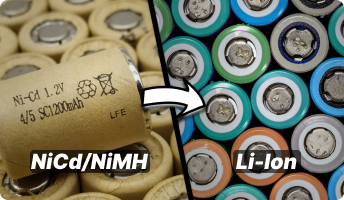 Dlaczego nie warto przerabiać akumulatorów NiCd/NiMH na Li-ion?
Artykuł wyjaśnia, dlaczego przerabianie akumulatorów NiCd i NiMh na Li-ion w elektronarzędziach często nie ma sensu...
-
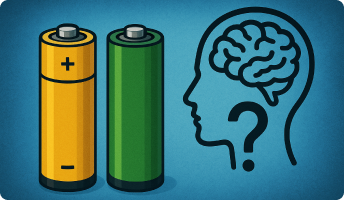 MEMORY EFFECT – TRUTH OR FICTION?
The so-called battery memory effect, often referred to as “cycle memory”, was traditionally described as a phenomenon...
-
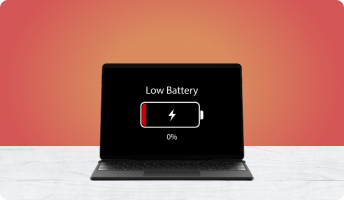 WHAT TO DO WHEN YOUR LAPTOP BATTERY REFUSES TO CHARGE
Wielu użytkowników laptopów spotyka się z sytuacją, w której bateria przestaje się ładować, system nie pokazuje jej...
-
 BATTERY CAPACITY LOSS – WHY DOES MY BATTERY LAST ONLY 10 MINUTES?
Does your laptop battery last barely 10 minutes? Does moving the laptop from one room to another require you to...
-
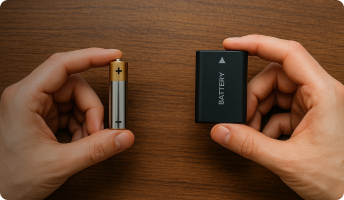 WHAT IS THE DIFFERENCE BETWEEN A BATTERY AND A RECHARGEABLE ACCUMULATOR?
Batteries and rechargeable accumulators are an essential part of modern life. Każdego dnia używamy urządzeń...
-
 HOW TO REGENERATE A LAPTOP BATTERY – PART I
Regenerating a laptop battery is far more complex than it may initially seem. It requires precision, technical...
-
 HOW TO REGENERATE A LAPTOP BATTERY – PART II
Regenerating a laptop battery may sound simple, but in practice it requires precision, technical awareness and a...
-
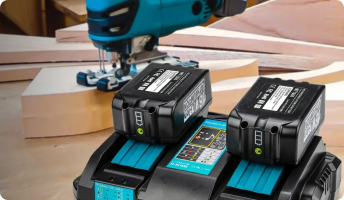 BATTERY CHARGERS
Choosing the right battery chargers increases the performance and lifespan of a battery. Selecting an unsuitable...
-
 LENOVO POWER MANAGER
Program komputerowy firmy Lenovo o nazwie Power Manager jest świetnym programem do zarządzania energią w laptopach....
Blog categories
Search in blog
Archived posts
BATTERY CHARGERS
The performance and lifespan of batteries largely depend on the quality of the charger. In today’s world, where price competitiveness is crucial, chargers are often treated as a lower priority, especially as consumer products. Meanwhile, choosing a high-quality charger is important not only because of potential replacement costs, but also to avoid unnecessary frustration caused by low charging efficiency.
We distinguish two types of chargers: personal chargers and specialist chargers. For mobile phones, laptops, or digital cameras, manufacturers provide personal chargers. They are designed for a specific battery type, they are cost-effective, and they work well with the devices they are intended for.
Specialist chargers are used for professional applications and often feature multiple charging ports. They are sold by both original equipment manufacturers (OEM) and independent external manufacturers.
While OEM manufacturers usually offer only basic hardware functions, independent companies producing such equipment often add additional features such as battery discharging or calibration.
Some external manufacturers focus on creativity and provide advanced charging methods for nickel and lead batteries. While pulsed DC charging may be beneficial for nickel batteries, it is not recommended for lithium-ion batteries. Voltage spikes are too high and may damage the protection circuit. Battery manufacturers do not recommend alternative charging methods and claim that pulsed DC charging may shorten the lifespan of lithium-ion batteries.
Among the additional features, chargers may offer many very useful ones, such as protection against high and low temperatures. Below 0°C, the charger reduces or prevents charging, depending on the battery type. During high temperatures, the charger activates only when the battery temperature returns to a safe level. Advanced lead-acid chargers offer temperature-dependent threshold voltage as well as settings that optimize charging for aging batteries.

Some chargers include a wake-up or “boost” function that allows charging lithium-ion batteries that have entered sleep mode. A battery may fall asleep when stored in a discharged state. In such cases, self-discharge may reduce voltage to a point where the battery shuts down completely. Standard chargers read such batteries as faulty and cannot charge them. The boost function applies a small current to activate the protection circuit to around 2.20–2.90V per cell, at which point standard charging becomes possible. It is not recommended to revive lithium-ion batteries stored at 2V/cell or lower for a week or longer, as deep discharge permanently damages the cells.
There are two main charging methods: constant-current charging (I method) and constant-voltage charging (U method). Lead-acid and lithium batteries maintain a constant threshold voltage. As voltage increases, the battery begins to saturate, and the current gradually drops, while the battery continues to follow its charging profile. Full charge occurs when the current decreases to a predefined level.
Nickel batteries behave differently. During charging, the current is controlled while the voltage fluctuates freely. This process can be compared to lifting a weight using an elastic band. A slight drop in voltage after a period of steady increase indicates full charge. Charging based on voltage drop works well for terminating fast charging but requires additional safety systems to react to issues such as short circuits or cell mismatch. Most batteries and chargers are also equipped with temperature sensors that automatically stop charging when the temperature exceeds a safe level.

Temperature rise is normal, especially when nickel batteries reach nearly full charge. When the battery reaches standby mode, it must cool down to room temperature. High temperature causes stress, and extended exposure reduces battery lifespan. If the temperature remains above room level, the charger is not operating correctly. In such cases, the battery should be disconnected once the “ready” indicator appears. Prolonged trickle charging may also cause damage, so nickel batteries should not be left in a charger for more than a few hours.
Lithium batteries should not heat up in the charger, and if this happens, either the battery or the charger may be faulty. In such cases, stop using the battery and/or charger. Lithium-ion chargers do not have a trickle-charge option and automatically disconnect the battery once it reaches full charge.

A mobile phone charger consumes around 2W during charging, while a laptop charger draws nearly 100W. Standby power consumption should be low, which is why Energy Stars offers mobile phone chargers rated in several efficiency classes: 5-star for chargers consuming 30mW or less, 4-star for 30–150mW, 3-star for 150–250mW, and 2-star for 250–350mW. The industry average for such devices is 300mW in idle mode, earning 1 star, while chargers consuming more than 500mW receive no stars. Low standby consumption is achievable only for small chargers, such as the more than 4 billion mobile phone chargers, most of which remain plugged in constantly.

Posted in:
Ciekawostki związane z bateriami
Related posts
-
HOW TO REGENERATE A LAPTOP BATTERY – PART I
Regenerating a laptop battery is far more complex than it may initially seem. It requires precision, technical...Read More
-
WHAT IS THE DIFFERENCE BETWEEN A BATTERY AND A RECHARGEABLE ACCUMULATOR?
Batteries and rechargeable accumulators are an essential part of modern life. Każdego dnia używamy urządzeń...Read More
-
BATTERY CAPACITY LOSS – WHY DOES MY BATTERY LAST ONLY 10 MINUTES?
Does your laptop battery last barely 10 minutes? Does moving the laptop from one room to another require you to...Read More
-
WHAT TO DO WHEN YOUR LAPTOP BATTERY REFUSES TO CHARGE
Wielu użytkowników laptopów spotyka się z sytuacją, w której bateria przestaje się ładować, system nie pokazuje jej...Read More
-
MEMORY EFFECT – TRUTH OR FICTION?
The so-called battery memory effect, often referred to as “cycle memory”, was traditionally described as a phenomenon...Read More
Leave a comment