







test

0
-
-
-
Categories
-
-
-
-
-
-
-
-
-
-
-
-
-
-
-
-
-
-
- Akumulatory do bandownic
- Akumulatory do drukarek
- Akumulatory do foteli
- Akumulatory do stroboskopów
- Batteries for roller shutters
- Camera batteries
- Control device
- Diagnostic devices
- Flashlight batteries
- Gas nailers
- Geodetic devices
- Maszynki do strzyżenia
- Medical equipment
- Mop Batteries
- Mower batteries
- Thermal imaging cameras
- Welding accessories
-
-
-
-
-
-
-
-
-
Bicycles
- A2B
- Acecycles
- AEG
- Ansmann
- BionX
- BMZ
- Bulls
- Chilwee
- Clean Air
- Cleantron
- Derby
- Di Blasi
- Easy Motion
- Ecobike
- Fischer
- Gazelle
- Giant
- Grace
- Guru
- Heinzmann
- Hercules
- Kalkhoff
- Karcher
- Leaos
- Maratron
- Mate
- Matrabike
- MiFa
- NCM
- Panterra
- Phylion
- Prophete
- Protanium
- Qwic
- Sachs
- Samsung
- Sparta
- Stromer
- Suntour
- Sushi
- Telefunken
- Tianneng
- TranzX
- Triride
- Urban Mover
- Xiaomi
- Xion
- Yamaha
- Forklifts
- scooters
- Segway
- Skateboards
-
Bicycles
-
-
-
-
-
-
-
-
-
-
-
-
-
-
-
-
Kategorie
-
-
-
Featured
-
-
-
-
-
-
-
-
-
Kategorie
-
-
-
Featured
-
-
-
-
-
-
Latest posts
-
-
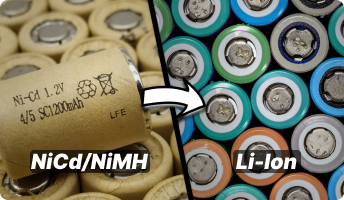 Dlaczego nie warto przerabiać akumulatorów NiCd/NiMH na Li-ion?
Artykuł wyjaśnia, dlaczego przerabianie akumulatorów NiCd i NiMh na Li-ion w elektronarzędziach często nie ma sensu...
-
 MEMORY EFFECT – TRUTH OR FICTION?
The so-called battery memory effect, often referred to as “cycle memory”, was traditionally described as a phenomenon...
-
 WHAT TO DO WHEN YOUR LAPTOP BATTERY REFUSES TO CHARGE
Wielu użytkowników laptopów spotyka się z sytuacją, w której bateria przestaje się ładować, system nie pokazuje jej...
-
 BATTERY CAPACITY LOSS – WHY DOES MY BATTERY LAST ONLY 10 MINUTES?
Does your laptop battery last barely 10 minutes? Does moving the laptop from one room to another require you to...
-
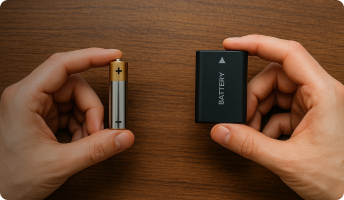 WHAT IS THE DIFFERENCE BETWEEN A BATTERY AND A RECHARGEABLE ACCUMULATOR?
Batteries and rechargeable accumulators are an essential part of modern life. Każdego dnia używamy urządzeń...
-
 HOW TO REGENERATE A LAPTOP BATTERY – PART I
Regenerating a laptop battery is far more complex than it may initially seem. It requires precision, technical...
-
 HOW TO REGENERATE A LAPTOP BATTERY – PART II
Regenerating a laptop battery may sound simple, but in practice it requires precision, technical awareness and a...
-
 BATTERY CHARGERS
Choosing the right battery chargers increases the performance and lifespan of a battery. Selecting an unsuitable...
-
 LENOVO POWER MANAGER
Program komputerowy firmy Lenovo o nazwie Power Manager jest świetnym programem do zarządzania energią w laptopach....
Blog categories
Search in blog
Archived posts
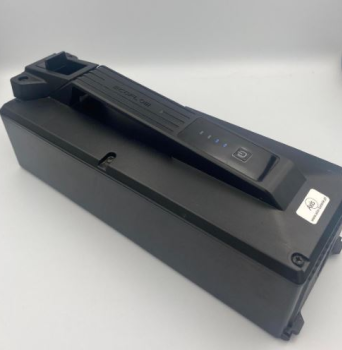
EcoFlow Blade – technical insights into the battery, common issues and effective refurbishment
The EcoFlow Blade robotic mower is a modern gardening tool that quickly gained popularity across Europe. At the core of its operation lies the lithium-ion battery EVH100-BP, which ensures long runtime and consistent performance. In this article, we explore the battery’s construction, key parameters, common issues and the refurbishment process that restores full functionality – often improving on the original performance.


EVH100-BP battery overview
The EcoFlow Blade battery is built from 18 cylindrical 21700 cells. These cells measure 21 × 70 mm and are widely used in modern devices thanks to their high energy density and reliable current delivery.
The EVH100-BP pack runs at a nominal voltage of 21.6 V, arranged in a 6S3P configuration – six series groups with three cells in parallel each. This layout offers a good balance between capacity and voltage while ensuring stable operation.
Main specifications:
- Cell type: EVE INR21700-50E
- Nominal capacity: 13.8 Ah
- Max discharge current: 14 A
- Max charge current: 13 A
- Features: carry handle, safety button, 4-level LED charge indicator
With these specs, the battery not only meets the mower’s demanding energy needs but also ensures safe and convenient operation. In practice, it allows several hours of mowing on a single charge – enough for an average-size lawn.

EVE 50E vs Samsung 50S – cell comparison
The stock EVH100-BP battery relies on EVE INR21700-50E cells, each rated at 5 Ah. During refurbishment we replace them with Samsung 50S cells – also 5 Ah – but with improved electrical characteristics and longer cycle life.
Comparison table – EVE 50E vs Samsung 50S
| Parameter | EVE INR21700-50E | Samsung INR21700-50S |
|---|---|---|
| Nominal capacity | 5000 mAh | 5000 mAh |
| Nominal voltage | 3.6 V | 3.6 V |
| Max continuous discharge | ~9.8 A | ~15 A |
| Max charging current | 2.5–3 A | 5 A |
| Internal resistance | ~25 mΩ | ~18 mΩ |
| Cycle life | ~500 cycles | 600–800 cycles |
| Temperature stability | average | high |
| Typical use | power tools, ESS | e-bikes, garden robots, powerbanks |
Why choose Samsung 50S?
– Higher cycle durability, handling more charge/discharge cycles before losing capacity.
– Better current performance, delivering stable power even under heavy load.
– Improved temperature tolerance, ideal for outdoor garden use.
After refurbishment, capacity increases to 15 Ah (compared to 13.8 Ah originally), extending runtime. Each battery comes with a 12-month warranty, and the refurbishment cost is approx. 400 PLN.
BMS and protection
Inside the battery is the MH100-BP-BMS-V1.1.0 management board. This Battery Management System not only safeguards the pack but actively manages charging, discharging and communication with the mower.
EcoFlow Blade BMS functions:
- controls safe charging and discharging ranges,
- balances individual cell voltages,
- protects against overheating, short circuits and overloads,
- communicates with the mower via SMBus.

Electronics protection
Many boards are sealed with insulating resin, shielding components from moisture, corrosion and mechanical stress. If a pack arrives without this layer, during refurbishment we apply an electrical insulating coating at least 2 mm thick to ensure long-term durability.

Common failures and prevention
Based on repair cases, several frequent causes of EcoFlow Blade battery failure can be identified:
Moisture and water ingress
Rain or even morning dew can cause short circuits and corrosion on unprotected boards.
Deep discharge
If left empty too long, the pack voltage may fall below the charger’s detection threshold, making standard charging impossible.
⚠️ Reviving a deeply discharged pack
- connect the cell pack before BMS to a power supply with current limit,
- set current no higher than 0.5 A,
- raise voltage to at least 3.0 V per cell,
- then switch to the original charger.
Cold storage
Leaving the battery in freezing conditions accelerates electrolyte degradation, leading to noticeable capacity loss after just one winter.
How to avoid issues?
- Recharge after every use,
- store in a dry, heated environment,
- protect from moisture,
- top up charge every 3 months minimum.
Service process and quality control
The refurbishment process follows several precise stages to guarantee a reliable, safe final product.
1. Initial diagnostics
We measure section voltages, real cell capacity, BMS status and check for corrosion or liquid damage.
2. Full cell replacement
All 18 cells are replaced, ensuring uniform performance. Samsung 50S cells are used for improved current handling and lifespan.
3. Electronics check
BMS is tested for proper protections, cell balancing and SMBus communication. If no coating was present, a protective layer is applied.
4. Final testing
The refurbished pack undergoes capacity measurement, load tests and full communication checks before returning to the customer – ready to use with the original charger.
FAQ – frequently asked questions
1. Which cells are used for refurbishment?
We only use branded cells – for EcoFlow Blade we choose Samsung 50S.
2. Does the battery regain full capacity?
Yes, even more – capacity increases to 15 Ah.
3. What warranty do you provide?
Each refurbished battery comes with a 12-month warranty.
4. How long does refurbishment take?
On average 3–5 working days.
5. Can a water-damaged battery be repaired?
Often yes – if the electronics are still salvageable.
6. How is the electronics protected?
We apply a minimum 2 mm insulating coating to safeguard BMS against moisture.
7. How should I store the battery in winter?
In a dry heated room (10–25°C) and recharge periodically.
8. Can I replace the cells myself?
Not recommended – it requires specialist tools and safety testing.
9. Do you provide post-service support?
Yes, we offer technical support via email and live chat.
10. Are spare parts available?
Yes, housings and electronics for EcoFlow batteries are available as spares.
Posted in:
Default category
Related posts
-
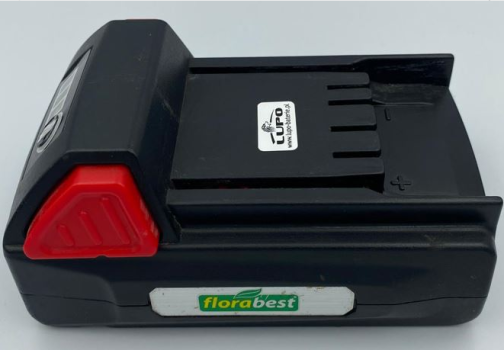 Florabest: practical tips to make your battery last longer
Florabest 18V batteries are widely used in Lidl garden tools. Although the system was replaced by Parkside, many...Read More
Florabest: practical tips to make your battery last longer
Florabest 18V batteries are widely used in Lidl garden tools. Although the system was replaced by Parkside, many...Read More -
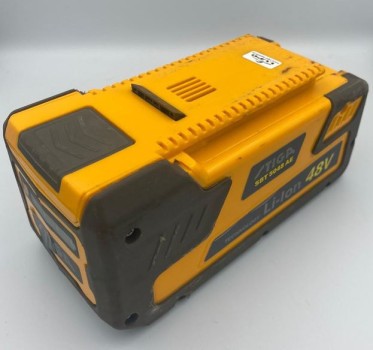 Stiga SBT5048AE & SBT2548AE – your complete guide to the 48V batteries
Stiga 48V batteries (SBT5048AE and SBT2548AE) – design, BMS electronics with PIC16F1937, 40/60A fuses, original LG...Read More
Stiga SBT5048AE & SBT2548AE – your complete guide to the 48V batteries
Stiga 48V batteries (SBT5048AE and SBT2548AE) – design, BMS electronics with PIC16F1937, 40/60A fuses, original LG...Read More -
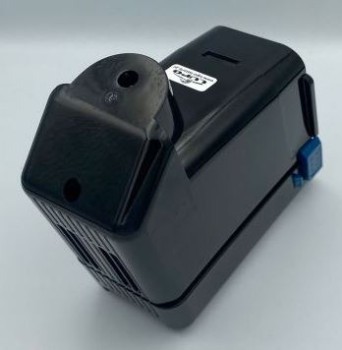 Proscenic P11 battery – everything you need to know
The Proscenic P11 battery is a key component of the cordless vacuum cleaner. Discover its construction, performance...Read More
Proscenic P11 battery – everything you need to know
The Proscenic P11 battery is a key component of the cordless vacuum cleaner. Discover its construction, performance...Read More -
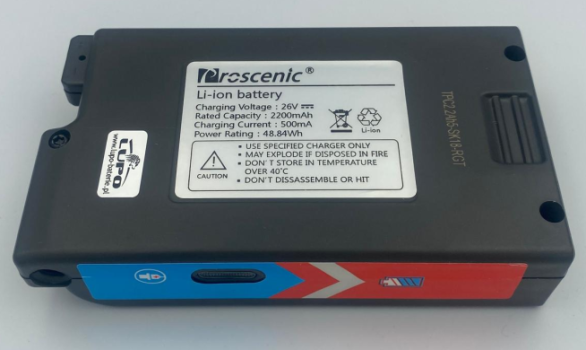 All About Proscenic P8 Max Batteries – Service Guide
The Proscenic P8 battery is the power source for P8 and P8 Max cordless vacuum cleaners. Over time, it loses...Read More
All About Proscenic P8 Max Batteries – Service Guide
The Proscenic P8 battery is the power source for P8 and P8 Max cordless vacuum cleaners. Over time, it loses...Read More -
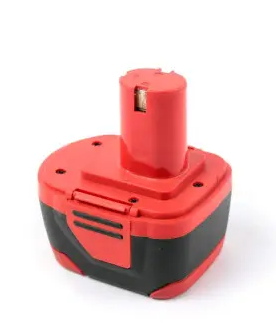 Sparky BR 12E-B1HR Battery – Construction, Common Issues and Refurbishment
The Sparky BR 12E-B1HR battery is widely used in Sparky screwdrivers and flashlights. In this guide, we take a closer...Read More
Sparky BR 12E-B1HR Battery – Construction, Common Issues and Refurbishment
The Sparky BR 12E-B1HR battery is widely used in Sparky screwdrivers and flashlights. In this guide, we take a closer...Read More
Leave a comment